Claustrophobia
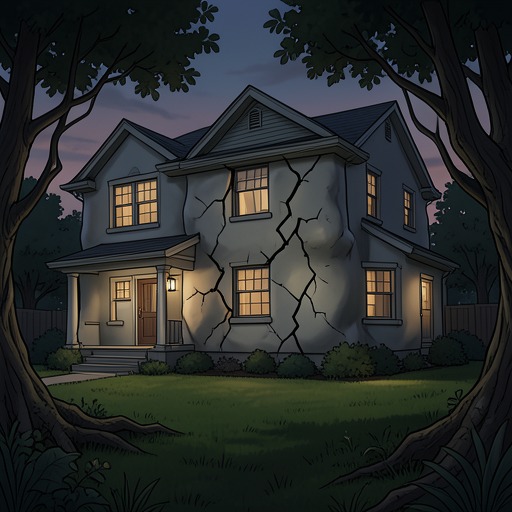
House of LeavesClaustrophobia, identified in Karen Green as a severe situational specific phobia, governs one of the central emotional and spatial conflicts in The Navidson Record. Her attacks are triggered by dark, enclosed, usually windowless and unfamiliar places, and the condition shapes her relationship with Will Navidson, her responses to the house on Ash Tree Lane, and the meaning of her final descent into its darkness. What initially looks like an individual fear gradually becomes the point at which domestic intimacy, family responsibility, documentary representation, and buried trauma converge.
Definition and Clinical History
Karen’s condition is not disclosed at the beginning of the record. Its first unmistakable manifestation occurs when a dark, doorless hallway appears in the living room and Will enters it after hearing echoes. Karen freezes on the threshold, unable to follow him toward the faint light inside. When Will returns carrying Chad Navidson and Daisy Navidson, Karen is drenched in sweat and holds them as though they have escaped a catastrophe. The children are not visibly disturbed and even want to return, but Karen’s distress leads Will to make the new passage temporarily off limits. She continues gripping Will’s hand in bed and asks him not to enter it again.
A later account identifies this reaction as part of a long-standing clinical disorder rather than an isolated response to the house. A study labels Karen as Subject #0027-00-8785 and diagnoses Specific Phobia, Situational type. Her panic attacks include an accelerated heart rate, sweating, trembling, a sensation of suffocation, choking, chest pain, severe dizziness, derealization, depersonalization, and an intense fear of dying. The symptoms move from bodily alarm to a destabilization of reality and selfhood, making an enclosed space feel not merely dangerous but existentially disorganizing.
The study records several unsuccessful or limited treatments. Karen initially received Tofranil, or Imipramine, at between 100 and 200 milligrams per day without improvement. She then changed to Propranolol, but vivid nightmares followed; Tranylcypromine also failed to satisfy her. Fluoxetine, commonly known as Prozac, produced a better response and increased her tolerance when she was deliberately exposed to dark enclosed spaces. Moderate weight gain and orgasmic dysfunction caused her to leave the study. Thereafter she relied mainly on avoidance, returning to Prozac only for short periods when attacks became more frequent.
Family Conflict and the House
The phobia intensifies the existing fracture between Karen and Will. Will’s project is presented outwardly as a record of family life, yet its deeper impetus is his failing relationship with Karen after nearly eleven years of overseas assignments, departures, and brief returns. Karen has made the stakes explicit: Will must abandon his professional habits or lose his family. Unable to choose either course completely, he converts reconciliation into a documentary subject, placing cameras throughout the house and directing attention toward the architecture rather than toward the emotional pathology that surrounds it.
Karen understands the hallway as a threat to Will, but also as a threat to the family’s fragile attempt at reunion. She tells Will that she does not want him to enter because she loves him and recognizes that something is profoundly wrong with the place. Will, meanwhile, wants to go inside and believes her opposition is bound up with her fears and anxieties, yet he also says that he loves her and therefore will not go without her. Their conflict is thus not simply a disagreement about exploration. His desire to investigate and her demand that he remain safe become competing forms of attachment, each claiming to protect the relationship while deepening the distance between them.
Karen’s fear also produces a protective family boundary. When Tom Navidson arrives, he finds Will’s estrangement from his fraternal twin still marked by resentment and years of silence. Karen refuses to let Will lead an exploration alone: if he goes, she says, she goes too. Looking toward Chad and Daisy, she explains that Will has already had a lifetime of wandering and danger, while the children and Karen need him to survive and grow old with them. Her resistance to the house therefore combines panic with caretaking. She is not merely refusing adventure; she is attempting to prevent the family’s anxiety from being organized around another disappearance.
The wider family system makes that fear more complicated. Tom’s estrangement from Will, which may have begun when Chad was born and Will’s attention shifted toward his son, left Tom feeling abandoned and contributed to later chemical dependency, unemployment, and the collapse of a relationship. The house consequently activates more than Karen’s personal phobia: it gathers marital alienation, sibling resentment, parental responsibility, and the family’s need for a new beginning into one threatening space. After a decade of distance, Will and Karen hoped the house would restore domestic life, but Will quickly sought refuge in documentary work, filling the rooms with his energy and authority while Karen struggled to define a space of her own.
Trauma, Silence, and Avoidance
The record offers competing explanations for the origins of Karen’s claustrophobia. Her clinical report does not mention sexual abuse, but her estranged older sister Linda later claims that their stepfather took both girls to an old farmhouse, forced Karen, then fourteen, down into a well while he raped Linda, and later reversed the sequence. Karen has refused to confirm or deny the account, and the narrative leaves its truth unresolved. The possible well trauma nevertheless gives the fear a buried history: a dark enclosure becomes associated with helplessness, violated bodily boundaries, and the inability to protect either oneself or another person.
Karen’s own explanation is deliberately simple. She distinguishes between open, illuminated environments and enclosed darkness, treating green lawns, warm light, and sunny beaches as heaven while describing elevators, poorly lit basements, and blackouts as situations capable of paralyzing her. Her account confirms the practical reality of the disability without resolving its psychological source. The ambiguity matters because the text refuses to reduce the condition to a single verified origin, even while showing how a hidden or unspeakable past may return through bodily symptoms.
Avoidance becomes Karen’s ordinary method of survival. After Will vanishes down the Spiral Staircase, she is caught between a threshold leading into the house and one leading out. She eventually leaves Ash Tree Lane and, in some respects, leaves Will, but the act does not remove the phobia. In New York she continues to avoid subways and elevators, demonstrating that the fear belongs to her lived world rather than existing only as a reaction to the supernatural house. The architecture has changed, but the bodily rule remains: unknown enclosure must be escaped before it becomes overwhelming.
Overcoming the Threshold
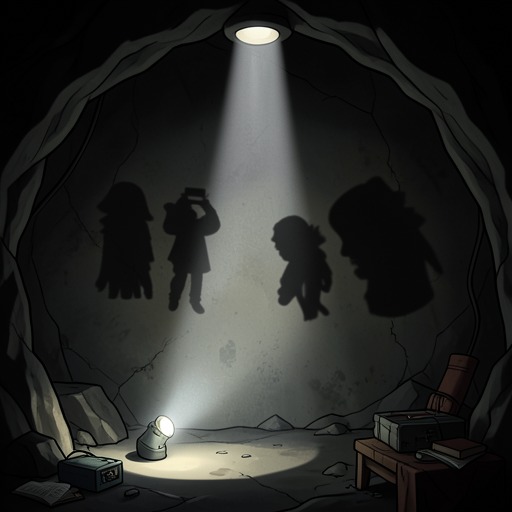
Karen’s final movement into darkness reverses the paralysis of her first encounter with the hallway. She stands for several minutes at the brink, pointing a flashlight into the dark and calling for Will. When she finally enters, she does not announce her decision or dramatize it with a deep breath. She simply steps forward and disappears behind the black curtain. A moment later the hollow space is gone and the wall has returned to its former condition, except that the children’s drawings have vanished.
The action does not prove that the phobia has been medically cured. It shows instead that Karen can act against it under an extreme emotional pressure. The narrative presents her love for Will as the primary catalyst: the desire to embrace him defeats, at least in that moment, the memories of the well, the alleged abuse by her stepfather, or whatever childhood shadows remain concealed. Courage does not erase the fear; it reorganizes its power. The same darkness that previously immobilized her becomes the medium through which she attempts to recover the person and relationship she has lost.
This reversal also changes the meaning of the house. Earlier, the enclosed passage exposes the limits of romantic reassurance: Will loves Karen but cannot understand why exploration is intolerable, while Karen loves Will but cannot make him feel the danger she perceives. At the final threshold, love becomes action rather than argument. Karen crosses not because the space has become safe or comprehensible, but because remaining outside would mean accepting Will’s disappearance. Her entrance therefore functions as both rescue attempt and self-confrontation.
Narrative and Thematic Significance
Claustrophobia provides the emotional architecture beneath the documentary’s apparent interest in impossible space. Will focuses on the house partly because Karen’s personal history and fear are too difficult to represent directly. The film contains abundant domestic footage, yet the calamities of the past and the pathology of the relationship remain largely omitted. The supernatural hallway becomes a displaced image of what the couple cannot openly examine: intimacy that threatens, separation that protects, and a home that refuses to remain familiar.
The condition also complicates the idea of disability as a mere plot device. Karen’s fear is clinically described through symptoms, medication, avoidance, and recurring impairment across different locations; it affects sexuality, mobility, family decisions, and the possibility of ordinary domestic life. At the same time, the narrative repeatedly makes the phobia carry symbolic weight. Her bodily experience is real, but the house recruits it into a larger drama about family boundaries and buried violence. The tension between those two levels prevents the fear from becoming either a purely medical defect or a wholly abstract metaphor.
Finally, Karen’s crossing transforms perception into a form of knowledge. Critical commentary links her success to the moments in which she relearns how to see Will and thereby begins to see herself more clearly. The record’s darkness is consequently not overcome by illumination alone. Karen must decide what the darkness means, what she is willing to risk, and whether fear will dictate the boundaries of love. Her final step leaves the origin of the phobia unresolved, but it gives the condition a decisive narrative outcome: claustrophobia remains part of Karen’s history, yet it no longer possesses the final authority over her action.